
Art Care & Preservation for Paintings, Sculpture, and Fine Art Prints
These practical tips for caring for your art will help preserve your paintings, sculptures, and fine art prints for generations to come.
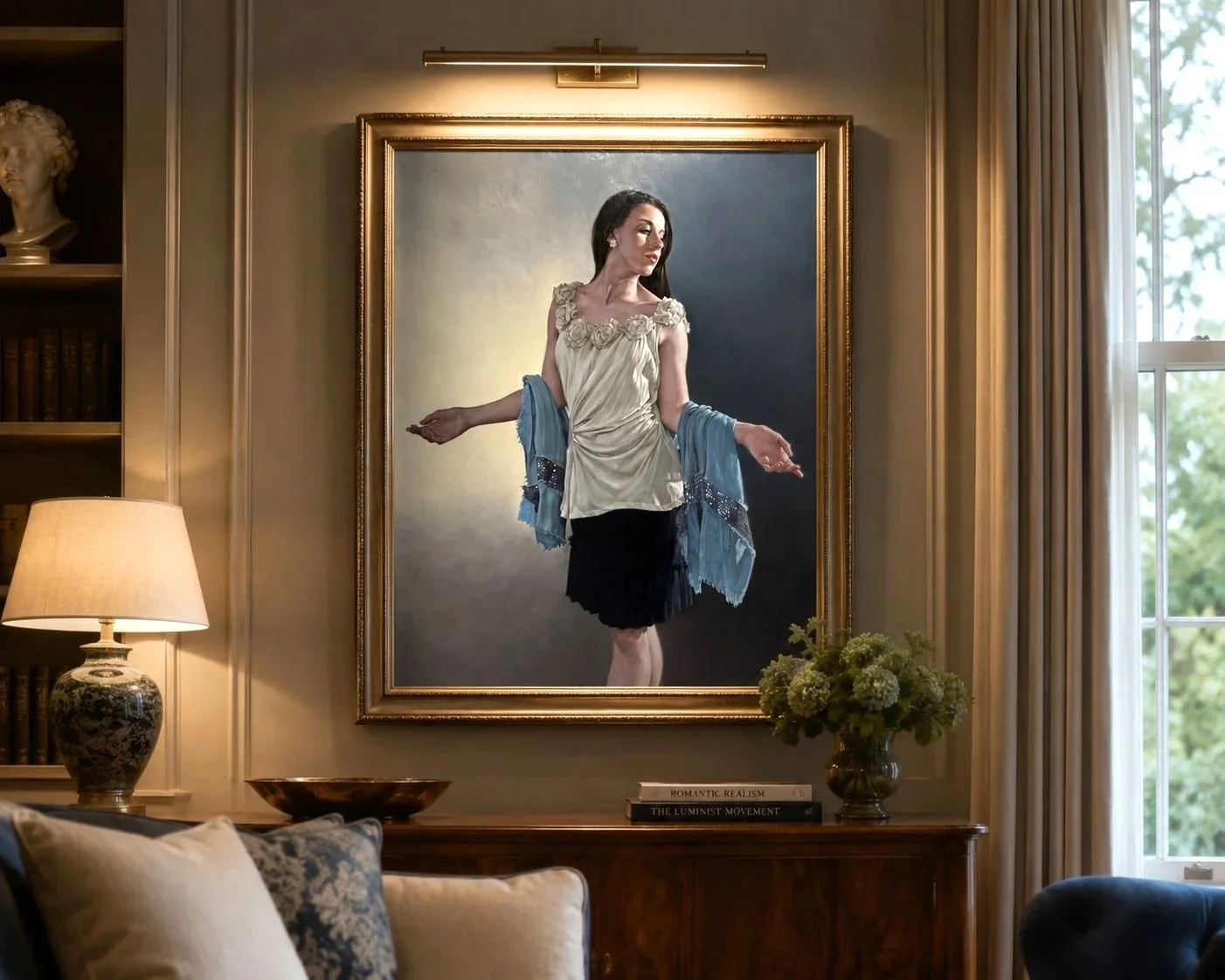
Fine art is created to be enjoyed for a lifetime and, with proper care, can often be passed from one generation to the next. Whether you collect paintings, sculptures, or fine art prints, a few simple precautions can help preserve the beauty, condition, and value of your artwork for years to come.
At Quent Cordair Fine Art, we believe that caring for artwork should be straightforward and rewarding. The following guidelines will help you protect your collection while continuing to enjoy it every day.
Common Causes of Artwork Damage
Most artwork damage occurs gradually and can often be prevented with proper care and display. Prolonged exposure to sunlight is one of the most common causes of fading, as ultraviolet (UV) light can slowly alter pigments and materials over time. Excessive humidity can contribute to mold, warping, corrosion, and other forms of deterioration, while extremely dry conditions may cause cracking or brittleness in certain materials.
Improper storage and frequent temperature fluctuations can also affect the condition of paintings, sculpture, and fine art prints. Artwork stored in garages, attics, basements, or other uncontrolled environments may be exposed to heat, cold, moisture, and rapid environmental changes that accelerate aging and increase the risk of damage. By maintaining a stable environment and following basic preservation practices, collectors can help protect their artwork and enjoy its beauty for generations.
Original oil paintings and fine art prints should be displayed in a stable environment away from excessive moisture, direct sunlight, and extreme temperature fluctuations. Avoid hanging artwork directly above fireplaces, radiators, humidifiers, or other sources of heat and moisture.
When moving artwork, always handle it carefully by the frame rather than the canvas or painted surface. Dust frames gently with a soft, dry cloth and avoid using household cleaners on the artwork itself.
Caring for Paintings
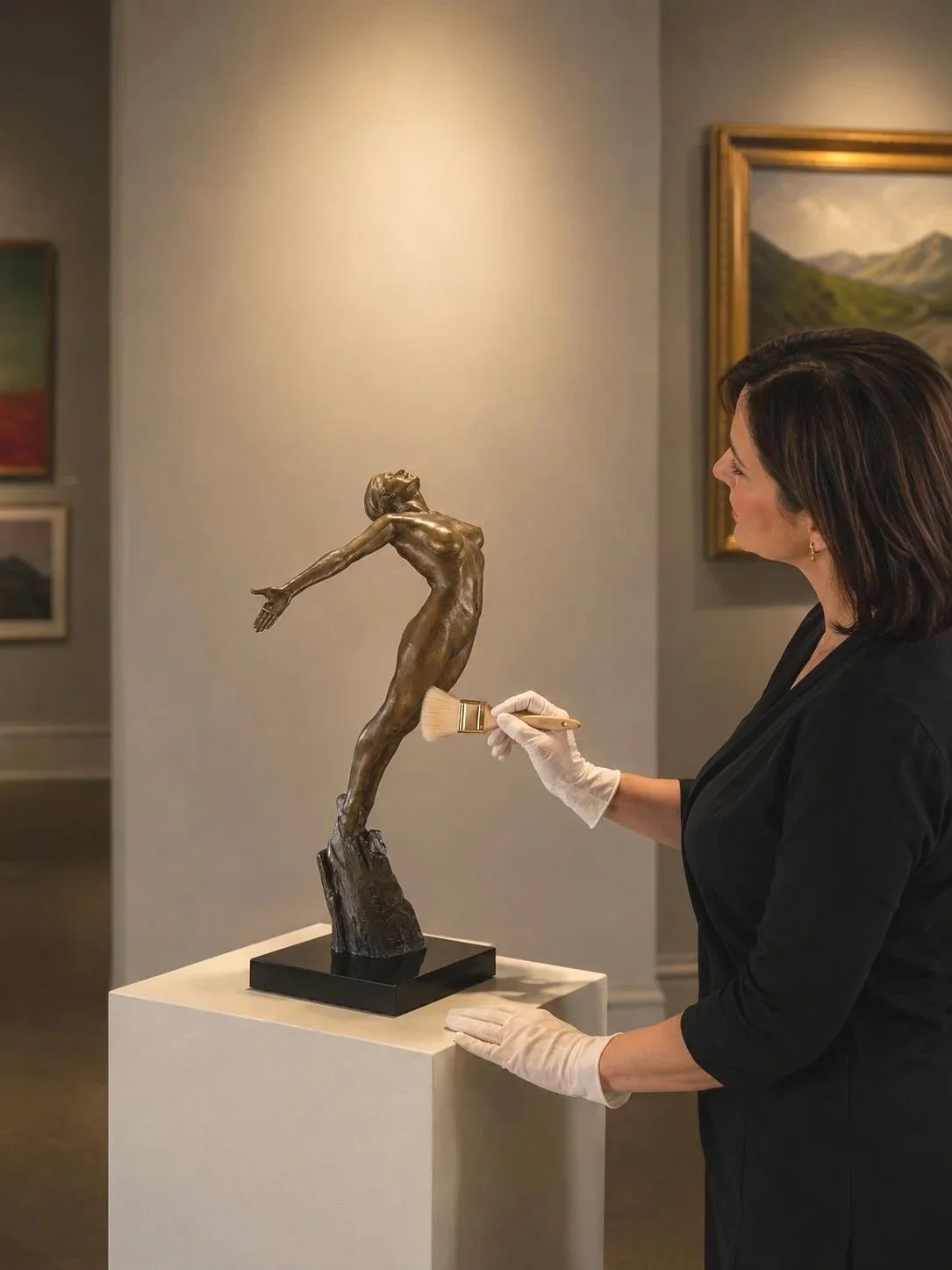
Fine art sculpture is remarkably durable and can provide generations of enjoyment with minimal care. Indoor sculptures generally require only occasional dusting with a soft cloth or clean natural-bristle brush to remove surface dust from detailed areas. Avoid household cleaners, polishes, or abrasive products, as these can damage the finish or alter the sculpture's appearance over time. When moving a sculpture, always lift from the strongest structural areas or base, and avoid placing pressure on delicate elements such as arms, hands, or extended forms.
Outdoor sculpture requires additional consideration due to exposure to sunlight, moisture, temperature changes, and airborne contaminants. Bronze sculptures develop a natural patina that protects the metal while contributing to its beauty and character. Preserving this patina is an important part of long-term care. Periodic cleaning and occasional waxing, when recommended by the artist or foundry, can help protect the surface and maintain its appearance. Whether displayed indoors or outdoors, proper placement, careful handling, and routine maintenance will help ensure your sculpture remains a source of beauty and inspiration for years to come.
Caring for Sculpture
Caring for Fine Art Prints
Fine art prints are designed to provide many years of enjoyment when properly displayed and cared for. Prints on paper should be framed using archival materials and protected with UV-filtering glass or acrylic whenever possible. Canvas prints should be displayed away from excessive moisture, direct sunlight, and sources of heat. As with original artwork, avoid using household cleaners directly on the print surface and dust frames gently with a soft cloth or a clean, soft-bristle brush. Feather dusters are not recommended as they could scratch the art. Proper framing and display can help preserve the color, detail, and beauty of fine art prints for decades.
Protecting Artwork from Sunlight
Sunlight is one of the most common causes of long-term artwork damage. Prolonged exposure to ultraviolet (UV) light can gradually fade pigments, alter colors, and accelerate the aging of both paintings and works on paper. Even indirect natural light can affect artwork over time, particularly in bright rooms with large windows or extended daily sun exposure.
To help preserve the beauty of your collection, avoid placing artwork in direct sunlight whenever possible. UV-protective glazing and conservation framing materials can significantly reduce harmful light exposure while allowing the artwork to be enjoyed safely. In especially bright environments, rotating artwork periodically or relocating sensitive pieces can further help protect them from uneven fading and ensure their appearance remains vibrant for years to come.
Proper Art Lighting
Proper lighting can dramatically enhance the enjoyment of fine art while helping to preserve it for the future. Modern LED lighting is often the preferred choice because it produces very little heat and emits significantly less ultraviolet radiation than many traditional bulbs. Heat-producing incandescent and halogen lights can contribute to fading and deterioration over time and should generally be avoided, especially for sensitive works on paper.
Thoughtful accent lighting can bring artwork to life by highlighting color, texture, and fine details that might otherwise go unnoticed. Positioning lights at appropriate viewing angles helps reduce glare and reflections while creating an even, natural appearance across the artwork's surface. Whether illuminating a painting, sculpture, or collection wall, well-designed lighting enhances both the visual impact of the artwork and the experience of living with it every day.
Framing and Display Considerations
The way artwork is framed and displayed plays an important role in its long-term preservation. Conservation framing uses museum-quality materials designed to protect artwork from environmental factors that can cause deterioration over time. Archival mounting methods, acid-free mats, and conservation-grade backing materials help prevent discoloration, staining, and damage while allowing the artwork to remain stable for years to come. For works on paper, photographs, and limited-edition prints, these protective measures are particularly important.
Proper display is equally essential. Artwork should be securely mounted using appropriate hanging hardware designed for the size and weight of the piece. Large paintings, framed works, and heavy sculptures may benefit from professional installation to ensure both safety and optimal presentation. Thoughtful framing and secure display not only protect your investment but also enhance the beauty of the artwork, allowing it to be enjoyed with confidence for generations.
Artwork in Different Environments
Different spaces present different opportunities and considerations for displaying artwork. In living rooms and family gathering areas, artwork often serves as a focal point that sets the tone for the space and reflects the personality of the homeowner. Bedrooms may call for more tranquil and contemplative works that contribute to a sense of comfort and relaxation, while entryways provide an opportunity to create a memorable first impression and introduce visitors to the character of the home.
Artwork can also play an important role in professional environments. Offices and workplaces often benefit from pieces that inspire creativity, achievement, focus, or conversation while contributing to a welcoming atmosphere for clients and guests. Outdoor spaces offer a unique opportunity to enjoy sculpture and garden art in harmony with the surrounding landscape. When selecting artwork for any environment, factors such as lighting, scale, traffic patterns, and exposure to the elements should be considered to ensure both an attractive presentation and the long-term preservation of the artwork.
If you are unsure which artwork is best suited for a particular room, office, or outdoor space, our art consultants are happy to provide complimentary placement recommendations and visualization assistance using photographs of your space.
Learn more about our Art Consulting Services.
Moving and Storing Artwork
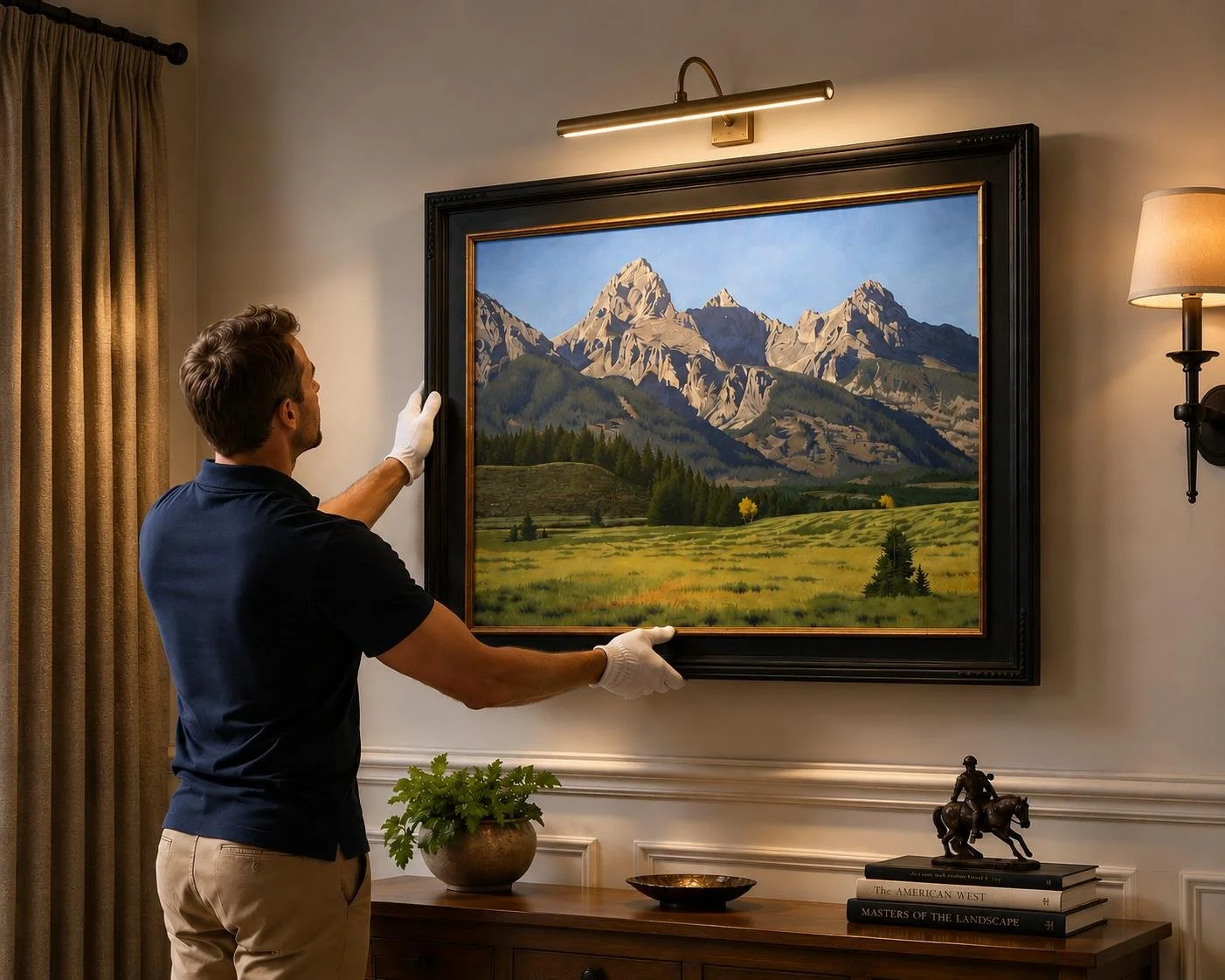
Proper storage and transportation are essential for protecting artwork when it is not on display. Whenever possible, retain the original packing materials, crates, or shipping cartons provided by the gallery, artist, or framer, as these are often designed specifically for the artwork's size and protection requirements. If artwork must be stored for an extended period, a climate-controlled environment is recommended to help protect against excessive heat, cold, humidity, and temperature fluctuations that can damage both artwork and framing materials.
Avoid storing artwork in garages, attics, basements, or other areas where environmental conditions can change dramatically throughout the year. During storage and transport, corners, frames, and glazed surfaces should be carefully protected with appropriate padding and packing materials to prevent scratches, dents, or impact damage. Whether moving a single painting across town or transporting an entire collection, careful handling and proper packing can help ensure artwork arrives safely and remains in excellent condition for years to come.
Related Art Collecting Resources
Frequently Asked Questions About Art Care
How often should artwork be cleaned?
Most artwork requires very little routine cleaning. Dust can typically be removed with a soft microfiber cloth or natural-bristle brush, depending on the medium. Avoid household cleaners, sprays, or solvents unless specifically recommended by a professional conservator. If artwork appears stained, discolored, or damaged, consult a qualified art conservator before attempting any cleaning.
Can sunlight damage paintings?
Yes. Prolonged exposure to sunlight, particularly ultraviolet (UV) light, can cause colors to fade and materials to deteriorate over time. Whenever possible, artwork should be displayed away from direct sunlight. UV-protective glazing and proper placement can significantly reduce the risk of damage while allowing artwork to be enjoyed safely.
Should artwork be displayed above a fireplace?
Artwork can be displayed above a fireplace if the area remains relatively cool and dry. Excessive heat, smoke, or fluctuations in temperature and humidity can potentially damage artwork over time. If a fireplace is used frequently, it is important to monitor conditions and ensure that artwork is not exposed to excessive heat.
How do I care for bronze sculpture?
Bronze sculpture is durable and generally requires only occasional dusting with a soft cloth or natural-bristle brush. Avoid abrasive cleaners, chemical polishes, or harsh cleaning products that may damage the finish or alter the patina. Outdoor bronze sculptures may benefit from periodic waxing or professional maintenance, depending on the environment and the artist's recommendations.
What is archival framing?
Archival framing uses museum-quality materials designed to protect artwork from deterioration over time. These materials may include acid-free mats, conservation-grade backing boards, UV-protective glazing, and archival mounting methods. Proper archival framing helps preserve the appearance and condition of artwork for future generations.
How should artwork be stored during a move?
Artwork should be packed securely using protective materials that shield corners, frames, and surfaces from impact. Whenever possible, use the original packaging or custom packing materials designed for the artwork. During transport and temporary storage, artwork should be kept in a climate-controlled environment and protected from excessive heat, cold, humidity, and direct sunlight.
Art Care Products We Recommend
Over the years, we've identified a number of lighting, framing, display, and maintenance products that can help collectors care for and enjoy their artwork. Browse our recommended resources here.
Enjoying Art for a Lifetime
Fine art has the unique ability to enrich our homes, workplaces, and daily lives. With proper care, paintings and sculptures can remain beautiful sources of inspiration not only for years, but for generations.
Since 1996, Quent Cordair Fine Art has helped collectors acquire, display, and preserve artwork that celebrates beauty, achievement, love, and the human spirit. Whether you are caring for a single cherished piece or an entire collection, we are always happy to help you protect and enjoy the art you love.
Questions about framing, lighting, placement, preservation, or displaying artwork in your home? Contact us for personalized guidance. We're always happy to help collectors enjoy their artwork with confidence.
Whether you have questions about framing, lighting, placement, preservation, or selecting artwork for a particular space, we're happy to help.
Send us a photo of your room, office, or outdoor setting, and we can provide personalized recommendations and complimentary artwork visualizations to help you make confident decisions about displaying and enjoying your collection.
“Caring for your art helps ensure a lifetime of joy and inspiration.”
- Linda Cordair, Quent Cordair Fine Art