
How to Start Art Collecting With Confidence
A first purchase often begins with a feeling, not a spreadsheet. You see a painting or sculpture that captures your attention, and something in it feels true to your values, your aspirations, or the atmosphere you want to create in your home or office. That is why how to start art collecting is not merely a financial question. It is a question of vision.
In thirty years of helping new and experienced collectors, we have found that confidence rarely comes from knowing everything about art. It comes from learning what moves you, asking thoughtful questions and working with people you trust.
The most meaningful collections begin with a sincere response to beauty, mastery, and meaning. For new collectors, that is encouraging news. You do not need to know everything at the outset. You need a thoughtful standard, a willingness to look carefully, and the patience to buy with conviction.
How to Start Art Collecting by Defining Your Taste
Before you think about price ranges, mediums, or artists, consider what kind of art you want to live with. This is more revealing than asking what is currently fashionable. A serious collection should reflect your deepest preferences, not borrowed enthusiasm.
Some collectors are drawn to contemporary representational paintings because they offer both technical excellence and emotional clarity. Others gravitate toward sculptures that lend permanence and presence to an interior or garden. Some respond to portraiture, others to landscape, still life, or figurative work that affirms joy, romance, ambition, serenity, or human achievement. What matters is that the work is something you will look forward to seeing every day.
This is where frequent browsing becomes essential. Spend time with artworks rather than making quick decisions. Notice what continues to hold your attention after the first impression. Ask yourself whether the work is merely striking, or whether it grows richer the longer you study it. Collections gain coherence when they are guided by principles of beauty and meaning rather than impulse alone.
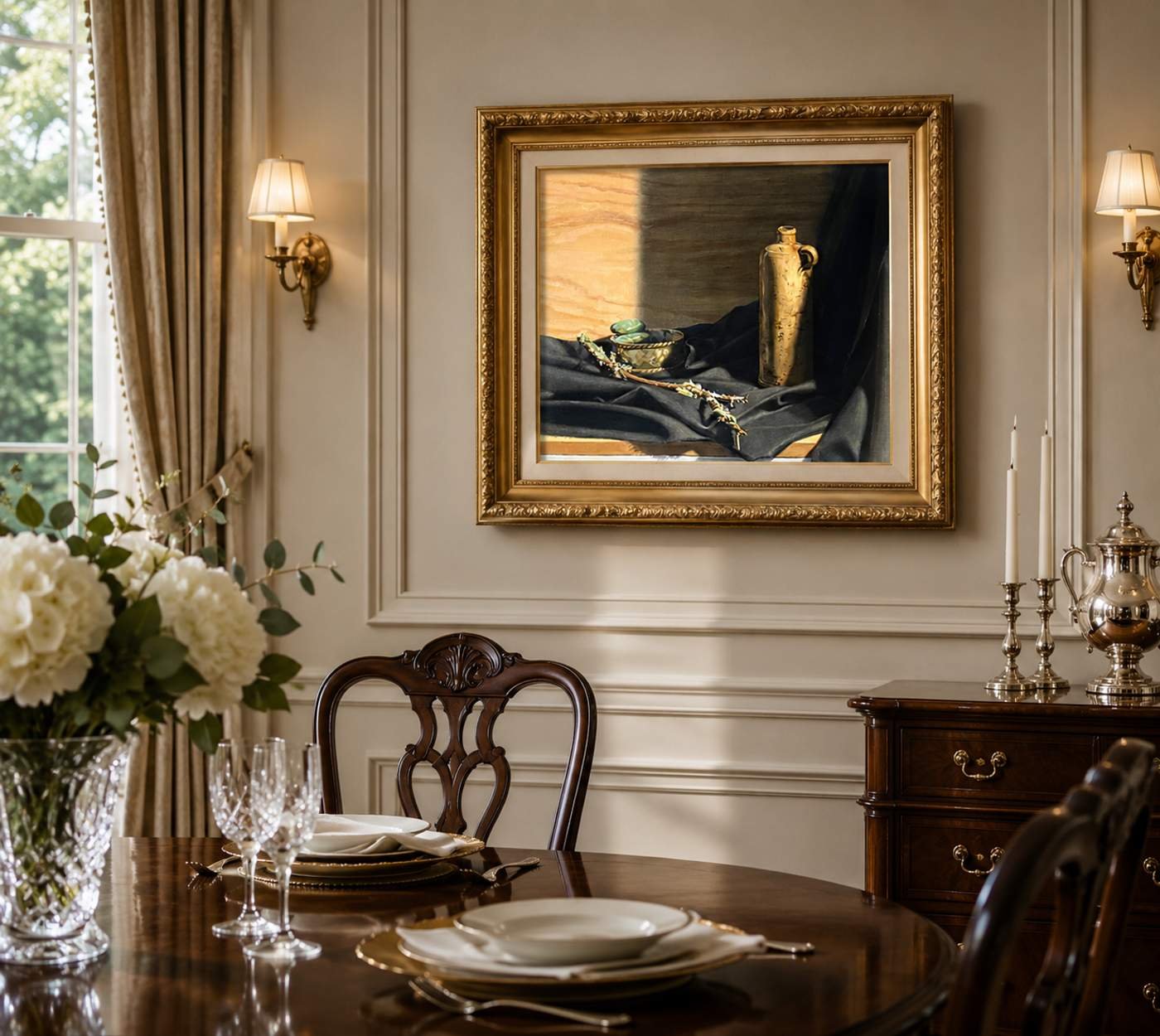
Oil Jug and Branch, original oil on linen by Linda Mann at Quent Cordair Fine Art
Start with Quality, Not Quantity
Many first-time buyers assume collecting means acquiring many pieces quickly. In practice, the opposite is usually wiser. One excellent work can do more for your home, your eye, and your long-term satisfaction than a cluster of lesser choices.
Quality in fine art includes several things at once. There is the artist's technical command, of course, but also the conceptual integrity of the work, the seriousness of the composition, and the emotional or philosophical substance it conveys. In representational art, craftsmanship matters profoundly. Drawing, color harmony, form, light, and finish are not decorative extras. They are the means by which an artist gives lasting shape to an idea.
For this reason, many collectors begin with a gallery that curates rigorously rather than presenting an indiscriminate assortment. Good curation helps you compare works within a meaningful standard. It also reduces the noise that can overwhelm new buyers who are trying to distinguish the memorable from the merely marketable. Quent Cordair Fine Art has curated a beautiful collection of Romantic Realism paintings and sculptures. You can visit the gallery in person in stunning Jackson Hole, WY, or online at cordair.com to browse or purchase.
Set a Budget That Leaves Room for Joy
A budget is not a restraint on collecting. It is part of collecting well. When you know your range, you can focus your attention and make decisions with composure. Quent Cordair Fine Art offers an art savings club to make saving towards art in their gallery easy and affordable. Club Cordair is popular with individuals and corporations.
The useful question is not, "What is the cheapest piece I can buy?" It is, "What can I purchase now that I will still be glad to own years from now?" For some, that may be an original drawing or a smaller painting. For others, it may be a life-size sculpture, a commissioned work, or a carefully chosen fine art print by an artist they admire. There is no single correct entry point. It depends on your means, your space, and your appetite for beginning with one significant statement rather than several tentative ones.
If you are furnishing a primary residence, you may prefer to invest in a cornerstone piece for an entry, living room, library, or garden and build gradually from there. If you are collecting for a corporate or design setting, your budget may need to account for scale, installation concerns, and how the work will function within an architectural environment.
Learn the Difference Between Admiring Art and Buying It
Many people know what they enjoy in a museum but feel less certain when purchasing for a private setting. The shift is simple but important. In a collection, the artwork becomes part of daily life.
That means you should think about proportion, placement, and atmosphere. A painting with delicate emotional nuance may be ideal for a bedroom or study, while a more expansive or triumphant work may belong in a formal living area or office. Sculpture introduces another layer of consideration because it occupies space physically and changes as you move around it. Outdoor works also require practical foresight about materials, scale, and environment.
This practical dimension does not diminish the poetry of collecting. It strengthens it. A well-chosen work should not feel like an object squeezed into a room. It should feel as though the room was waiting for it. Quent Cordair Fine Art offers free consulting services to help you decide on the perfect pieces.
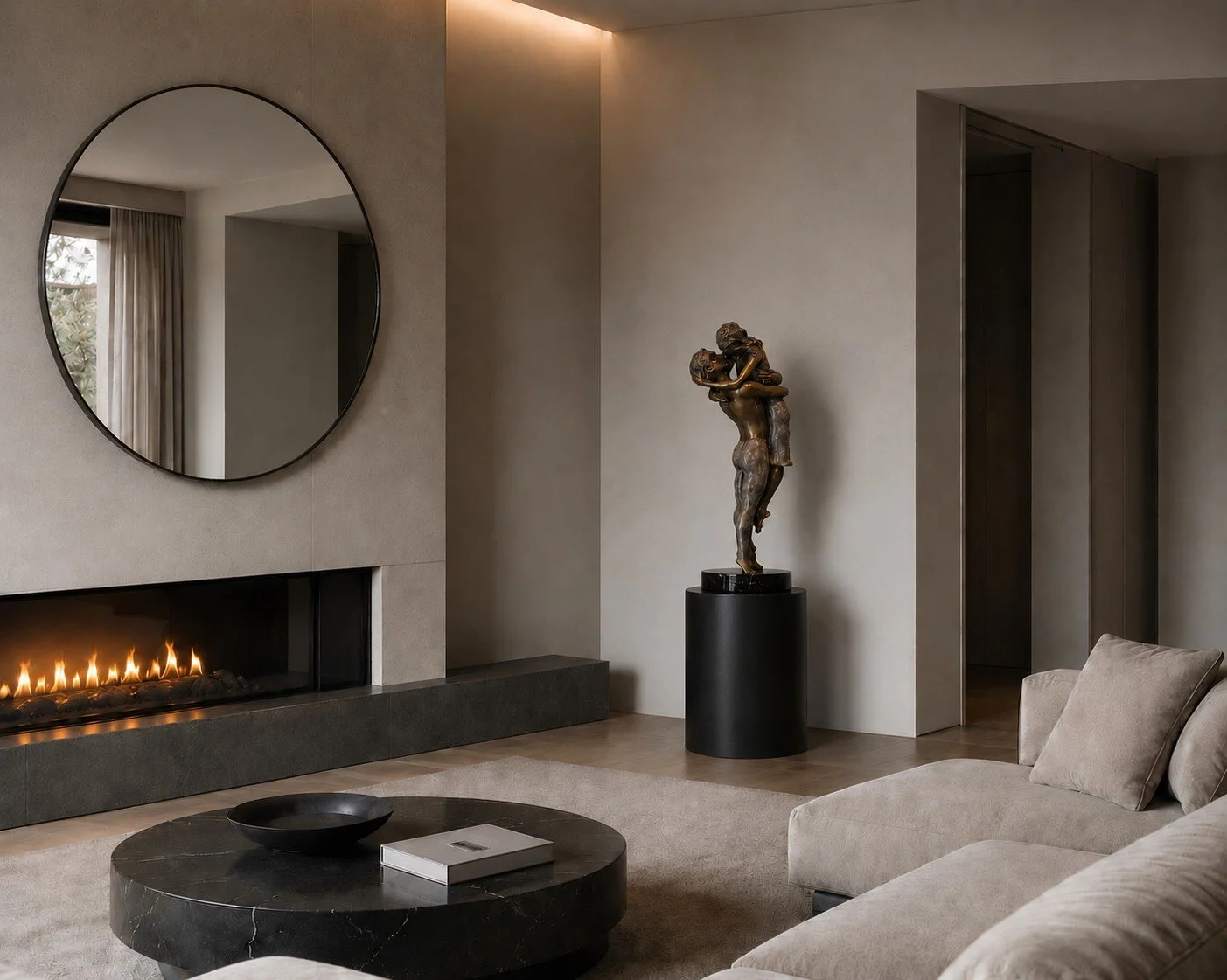
The Kiss, cast bronze by Mario Jason at Quent Cordair Fine Art
How to Start Art Collecting Without Guesswork
New collectors often worry about making an uninformed decision. The remedy is not to become an overnight expert. It is to ask good questions.
Ask about the artist's training, body of work, and development. Ask why a particular piece is significant within that artist's oeuvre. Ask how the work was made, what inspired it, and what distinguishes it from other available pieces. If you are considering a commission, discuss subject matter, scale, palette, and timing in clear terms. If you are purchasing for a specific interior or landscape, request guidance on fit and placement.
A reputable gallery should welcome these conversations. Fine art is not a commodity purchase. It is a considered acquisition, and good collector support is part of the value. For many buyers, confidence comes not from pretending certainty but from working with advisors whose standards are clear and whose recommendations are grounded in both scholarship and service.
Buy What Elevates Daily Life
The finest private collections do not exist only for special occasions. They shape the emotional tenor of ordinary days. A luminous painting seen each morning, a bronze figure that anchors a garden path, a drawing that quietly rewards attention in a reading room - these things influence the character of a life.
That is why subject matter matters. If you are drawn to art that celebrates beauty, love, aspiration, vitality, or noble character, trust that inclination. Not every serious artwork must be difficult, ironic, or intentionally obscure. Many collectors are seeking works that are deeply intelligent and technically accomplished while remaining legible, life-affirming, and profoundly beautiful.
This is especially true for those building collections around Romantic Realism and other forms of contemporary representational art. Such work offers a rare combination of classical discipline and modern relevance. It can feel timeless without feeling nostalgic, and elevated without becoming remote.
Build a Collection, Not a Storage Problem
Some collectors build around a theme, such as the human figure, Western landscapes, garden sculpture, or scenes of romance and achievement. Others build around a formal preference, such as draftsmanship, luminous color, or a commitment to realism. Still others collect around a philosophy of life, choosing works that embody courage, serenity, elegance, or joy.
As your collection grows, you may notice that certain works deepen one another through contrast or kinship. A tranquil landscape can give new resonance to a figurative painting nearby. A bronze sculpture can lend gravity to a room anchored by painted light and color. This dialogue among works is one of the quiet pleasures of collecting thoughtfully.
If you are unsure where to begin, begin with one piece you truly admire, then let the next acquisition answer it rather than repeat it. Collections become memorable through relationships, not accumulation.
Questions New Collectors Often Ask
How much should a beginner spend on art?
There is no universal amount. A first purchase should be meaningful rather than arbitrary. Some collectors begin with a modest original painting or sculpture, while others invest in a major work from the outset. The important consideration is not the price alone, but whether the artwork is something you will continue to value and enjoy for years to come.
Should I buy original art or fine art prints?
Both can play a role in a collection. Original artwork offers a direct connection to the artist's hand and creative process, while high-quality limited-edition prints can provide access to exceptional imagery at a lower price point. The right choice depends on your goals, budget, and collecting interests.
Can art be a good investment?
Art can appreciate in value, particularly when it is created by accomplished artists with established reputations. However, the strongest reason to collect art is not speculation. The most rewarding purchases are often those that enrich daily life through beauty, meaning, and inspiration. Financial appreciation, when it occurs, should be viewed as an additional benefit rather than the primary objective.
How do I know if a painting is right for my home?
A painting should feel at home both aesthetically and emotionally. Consider the scale of the work, the character of the room, and how the artwork makes you feel each time you encounter it. The best choices often reveal themselves through repeated viewing. A painting that continues to engage your attention and deepen your appreciation over time is usually a strong candidate for collection.
Work With Trusted Guidance
The art world can intimidate new buyers because it often confuses mystique with authority. In reality, the best collecting relationships are candid, educated, and attentive to your goals.
A gallery with a clear curatorial philosophy can be especially valuable here. If you are looking for beauty-centered contemporary realism, for example, a specialized gallery such as Quent Cordair Fine Art offers more than inventory. It offers context, standards, and a collector experience shaped by long-term trust. That matters when you are making choices meant to endure.
Do not hesitate to ask for assistance, even if you are at the beginning. Serious galleries are accustomed to working with both established and aspiring collectors. The right guidance can help you identify artists of substance, compare options intelligently, and choose work that fits both your aesthetic ideals and your practical setting.
Art collecting becomes rewarding the moment it stops feeling like a test and starts feeling like a conversation with excellence. Begin with what you find beautiful, choose with care, and allow your collection to become an expression of the life you most want to live.
Related Resources