
How to Collect Representational Sculpture
A fine sculpture changes the atmosphere of a room before anyone says a word. It gathers light, creates rhythm, and gives physical form to values that matter - grace, strength, serenity, joy. If you are learning how to collect representational sculpture, that is the first truth to keep in mind: you are not simply acquiring an object. You are choosing a lasting presence.
Representational sculpture rewards a different kind of attention than painting. A painting organizes the eye within a frame. Sculpture enters the viewer's space. It must hold its own from multiple angles, converse with architecture, and retain its power in changing light. For collectors who care about beauty, craftsmanship, and intelligible subject matter, that makes the category especially rich.
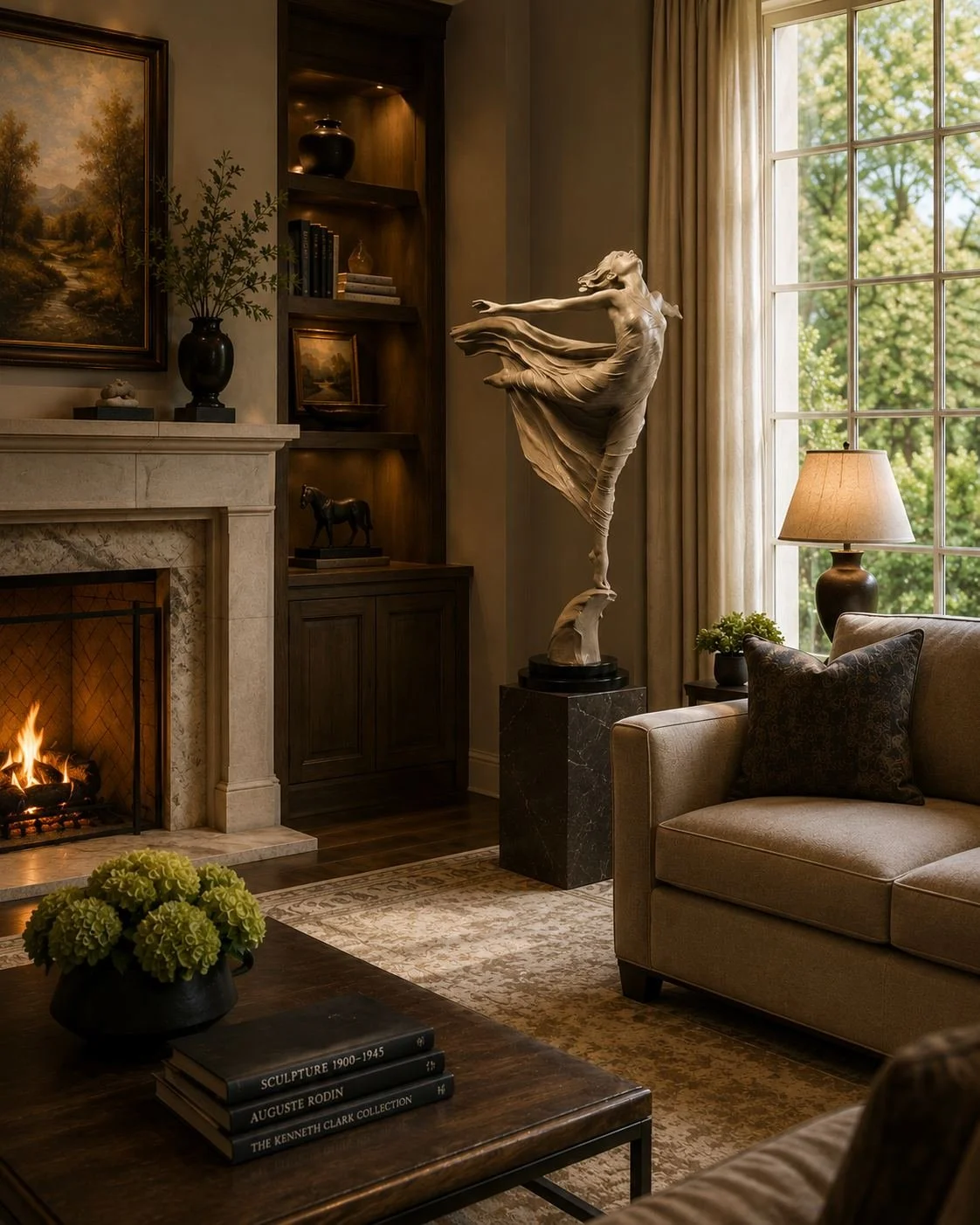
A well-placed sculpture adds movement, elegance, and artistic presence to a living space. Featured: Ascending by Karl Jensen
How to collect representational sculpture with clarity
As a premier gallery for Romantic Realism, we believe that collecting representational sculpture is about more than decorating a space — it is about surrounding yourself with physical expressions of human achievement.
Why Representational Sculpture Endures
The strongest collections usually do not begin with a strategy memo. They begin with a response. A figure in bronze may express courage without strain. A marble torso may suggest calm with astonishing economy. A garden sculpture may bring nobility to an outdoor setting that otherwise feels merely decorative. The emotional and philosophical response comes first. The practical decisions should support it, not replace it.
That said, good judgment matters. Many collectors make their best choices when they define what they want a sculpture to do. Is the work meant to become a focal point in an entry hall, to animate a library, to create a contemplative moment in a garden, or to deepen a collection centered on the human figure? A clear purpose narrows the field and improves the odds of a satisfying purchase.
It also helps to distinguish between attraction and commitment. You may admire a work's technical bravura yet find that it does not belong in your home. You may be moved by a quieter piece that continues to grow in significance over time. Mature collecting is not about choosing the loudest object in the room. It is about selecting work whose form, subject, and spirit continue to reward attention.
Start with subject, scale, and setting
In representational sculpture, subject is never incidental. The finest works do more than depict a figure, animal, or mythological motif accurately. They embody an idea through form. Ask yourself what kinds of themes you want to live with. Some collectors are drawn to dance, motherhood, courtship, or heroic aspiration. Others prefer equestrian subjects, wildlife, children, or sacred themes. Each establishes a different emotional register.
Scale is equally decisive. A sculpture can be excellent in itself and entirely wrong for its intended setting. Small works invite intimate viewing and often suit desks, shelves, pedestals, and tables where their nuances can be studied closely. Larger pieces require breathing room. They need enough surrounding space for silhouette, gesture, and mass to read properly. If the sculpture is outdoors, scale must also answer to distance, planting, pathways, and architecture.
Setting should guide material as well. Bronze is favored for good reason - it carries detail beautifully, develops character with age, and performs well indoors and out when properly finished. Marble has incomparable luminosity and a noble lineage, but it asks for a setting that honors its delicacy and visual purity. Resin or mixed media may be appropriate in some contemporary contexts, though collectors focused on permanence and classical standards often gravitate toward traditional materials. Collectors interested in learning more about bronze, marble, acrylic, relief, and monumental sculpture can explore our Fine Art Sculpture guide.
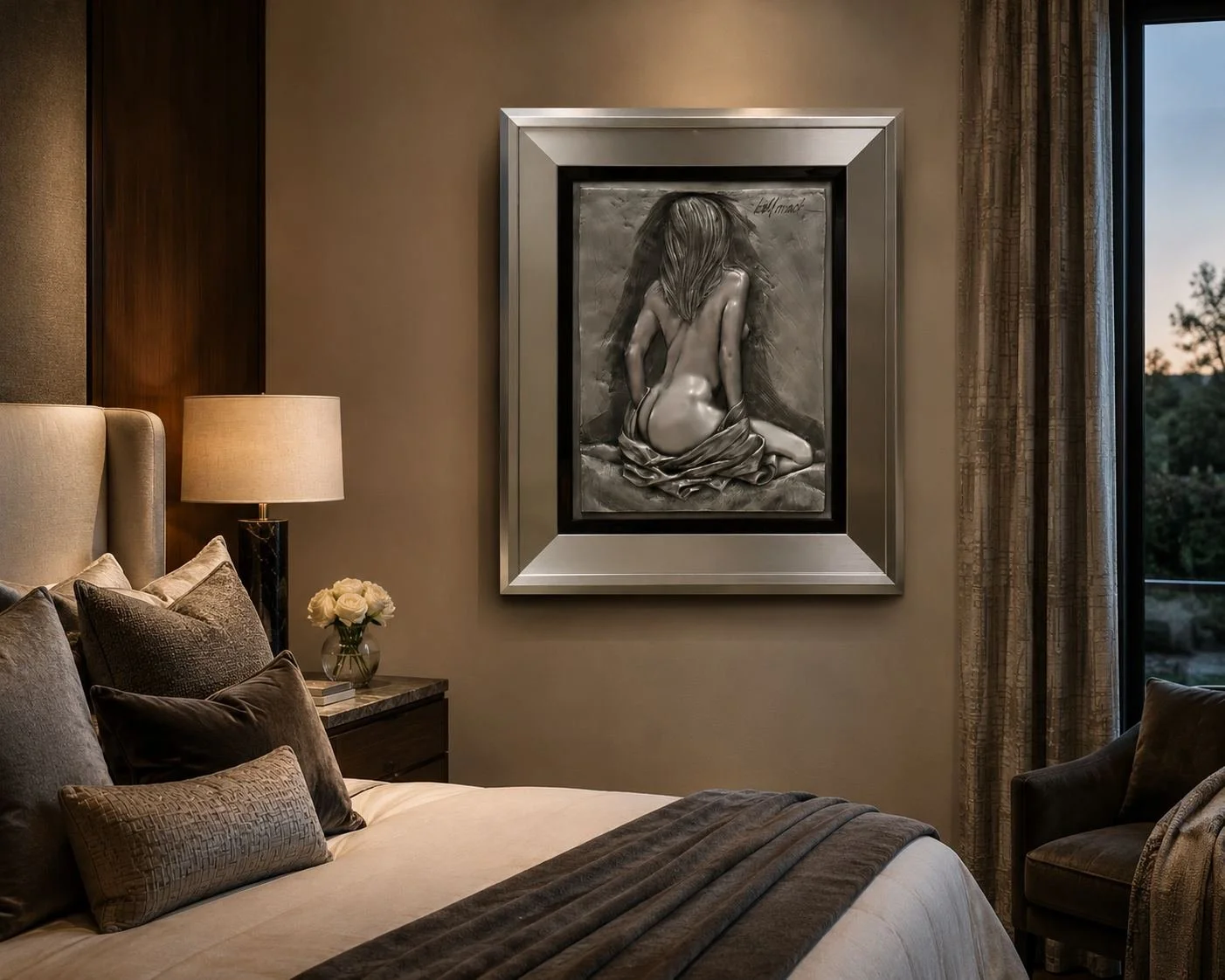
Wall-mounted relief sculpture combines the dimensional presence of sculpture with the practicality of framed artwork. Allure by Bill Mack transforms this bedroom into a romantic oasis.
What to look for in craftsmanship
Collectors new to sculpture sometimes focus first on subject and finish. Those matter, but craftsmanship goes deeper. Look at proportion, anatomy, gesture, transitions between planes, and the sculpture's structural coherence. Does the pose feel lived rather than arranged? Are the hands, feet, and facial features resolved with conviction? Does the surface treatment support the mood of the piece, or distract from it?
A serious representational sculptor understands more than likeness. He or she understands design in the round. A work should remain compelling from multiple viewpoints, even if one side is dominant. Turn the sculpture mentally, or physically if possible. Notice whether the lines continue with grace, whether masses balance one another, and whether negative space has been considered as carefully as solid form.
Surface deserves close attention because it carries the artist's intelligence. In bronze, a patina should enrich the form rather than bury it. In stone, the degree of polish should feel intentional, not generic. Tool marks can add life when used with discipline. Excessive slickness can flatten character, while roughness without purpose can feel unfinished. The standard is not uniformity. It is meaningful control.
Edition, rarity, and the artist's standing
When considering how to collect representational sculpture well, it is wise to understand how the work enters the market. Original sculpture may be unique, or it may be issued in editions, particularly in bronze. Editioned work is not lesser by definition. Much depends on the artist, the foundry, the size of the edition, and the quality control involved in casting and finishing.
Ask straightforward questions about whether the sculpture is unique or editioned, how many casts exist, and whether the artist supervises the process. In sculpture, execution after modeling matters enormously. A superb concept can lose force in poor casting or careless chasing. By contrast, an artist who works with excellent fabrication partners can produce editioned bronzes of exceptional beauty and integrity.
The artist's standing also matters, though not merely as a matter of prestige. Look for sustained seriousness of purpose, technical competence, and consistency across the body of work. Award recognition, exhibition history, and placement with discerning collectors can all be meaningful signs. So can the curatorial standards of the gallery presenting the piece. In a field crowded with novelty, serious representation is itself a form of guidance.
Buying for a home, collection, or landscape
A collector's goals shape the right purchase. In a private residence, sculpture often works best when it creates punctuation rather than clutter. One well-placed figure in a foyer or on a pedestal can do more than several competing works scattered through a room. The architecture should not be treated as neutral. Ceiling height, sight lines, natural light, and furniture scale all affect how the sculpture will read. Representational sculpture is particularly effective in entryways, libraries, studies, living rooms, and gardens where it can be appreciated from multiple viewpoints.
For established collections, the question becomes relational. Does the new piece deepen your existing interests, or introduce a fresh note that still belongs? A collection centered on Romantic Realism may welcome a sculpture that affirms vitality, romantic love, contemplation, or heroic ambition. The point is not strict sameness. It is coherence of values.
Outdoor collecting introduces additional considerations. Weather, drainage, foundation requirements, and visibility after dark all deserve thought. A garden sculpture should not feel like an afterthought dropped into landscaping. It should create an axis, a pause, or a destination. The best outdoor works acquire grandeur from the dialogue between art and nature.
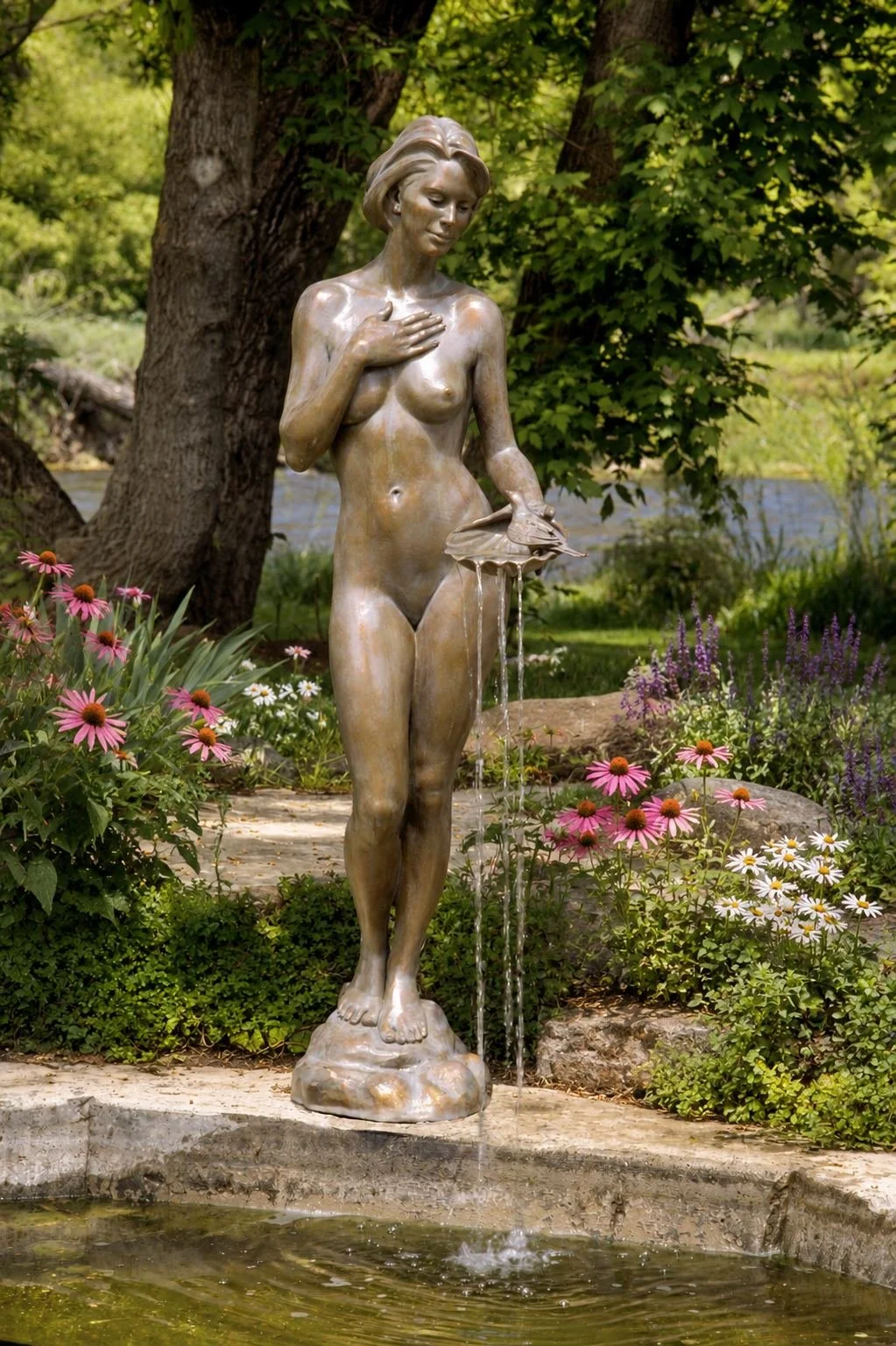
The Bird Bath cast bronze by Victor Issa adds a touch of elegance and Romantic Realism to this garden pond.
Work with a gallery that can guide the decision
Sculpture is one of the categories where trusted guidance has unusual value. Questions of placement, shipping, installation, edition details, commissions, and material suitability are not minor. They are part of the collecting experience itself. A knowledgeable gallery can help you compare pieces, think through scale, and identify artists whose work aligns with your aesthetic convictions.
This is especially helpful for new collectors who know what they admire but want confidence before purchasing. It is just as valuable for seasoned buyers furnishing a significant residence, hospitality project, corporate setting, or landscape design. At the highest level, collecting is not impulse shopping. It is connoisseurship supported by practical clarity.
That is one reason many collectors prefer galleries that pair curatorial seriousness with direct personal service. A gallery such as Quent Cordair Fine Art, known for beauty-centered contemporary representational work, can help bridge the distance between admiration and ownership by presenting sculpture within a clear philosophical and artistic framework.
How to collect representational sculpture over time
The most satisfying sculpture collections are usually built patiently. A collector may begin with a modest bronze and later add a larger figurative work, a garden piece, or a commissioned sculpture tailored to a specific space. Taste refines itself through looking. The more attentively you live with good work, the more quickly you recognize the difference between temporary attraction and lasting excellence.
It also helps to accept that your collection need not prove breadth. Depth is often more meaningful. A few pieces chosen with conviction can express more than a room full of tentative acquisitions. If a sculpture embodies technical excellence and an ideal you genuinely admire, it has every chance of remaining rewarding for decades.
Collect with your eyes open and your standards high. The right sculpture does more than occupy space. It gives form to what is finest in human experience, and once you have lived with such a work, ordinary decoration tends to lose its appeal.
The finest sculpture becomes more than a possession—it becomes a daily companion and a lasting expression of the values you choose to celebrate.
Explore our fine art sculpture collection, or contact Linda Cordair for a complimentary art consultation. We would be delighted to help you find a sculpture that enriches your home, garden, or collection for years to come. If you'd like to discuss your ideas by phone, call 307-264-1964.