A guide to purchasing Romantic Realism Paintings & Sculptures
Romantic Realism is a movement in fine art that celebrates beauty, human potential, love, achievement, and the meaningful aspects of life through exceptional representational painting and sculpture. For collectors seeking art that is both technically masterful and emotionally uplifting, Romantic Realism offers an enduring alternative to trends and abstraction.
A painting can change the emotional climate of a room in an instant. The right work does more than match a wall color or fill an empty space - it gives daily life a more elevated center. That is why learning how to purchase Romantic Realism art is not merely a purchasing exercise. It is a matter of choosing the values, atmosphere, and visual standards you want to live with.
Romantic Realism appeals to collectors who want beauty with conviction. It is representational art rooted in skill, clarity, and idealized meaning. Rather than irony, fragmentation, or fashionable obscurity, it offers work that is intelligible, life-affirming, and technically accomplished. For many buyers, that alone narrows the field. The question then becomes not whether to buy, but how to buy wisely.
Buying Romantic Realism art with confidence
The first step is to know what you are responding to. In this genre, craftsmanship matters, but so does philosophical content. A strong Romantic Realist work does not simply depict a figure, landscape, or still life competently. It presents its subject in a way that heightens significance. Beauty is not decorative excess here. It is a way of expressing admiration for existence, human potential, nature, love, achievement, or serenity.
That means your buying decision should begin with a close look at your own response. Ask yourself whether the work merely pleases you, or whether it continues to reveal purpose after several viewings. A serious purchase should sustain attention. If the piece feels alive, coherent, and emotionally generous rather than merely impressive, you are probably looking in the right direction.
At the same time, emotion alone is not enough. You also want evidence of artistic discipline. Look for sound drawing, convincing anatomy when figures are involved, controlled values, harmonious color, and a clear command of composition. Brushwork may be loose or highly finished depending on the artist, but it should always feel intentional. In Romantic Realism, technical fluency serves meaning. If technique calls attention to itself while weakening the subject, the work may be accomplished but not fully resolved.
Original, print, or commission?
One of the most practical aspects of how to purchase Romantic Realism art is choosing the format that best fits your goals. An original painting, drawing, or sculpture offers singular presence. It carries the direct touch of the artist and often has the strongest visual authority in a space. For many collectors, that uniqueness is central to the experience of ownership.
A fine art print can be an excellent choice when you are drawn to a particular image but want a more accessible price point or a secondary placement in a home or office. The trade-off is straightforward. You gain access to a beloved composition, but not the one-of-a-kind object. For some buyers, that distinction matters enormously. For others, especially when building a collection gradually, prints provide a meaningful entry into the world of serious representational art.
A commission is a different kind of purchase altogether. It makes sense when you want a specific subject, scale, palette, or emotional emphasis not available in existing inventory. Commissions can be deeply satisfying because they are tailored to your life and space. They also require patience, trust, and clarity. The best commission clients know what they want in broad terms, but still leave room for the artist to solve the work as an artist.
Buying Romantic Realism Sculpture
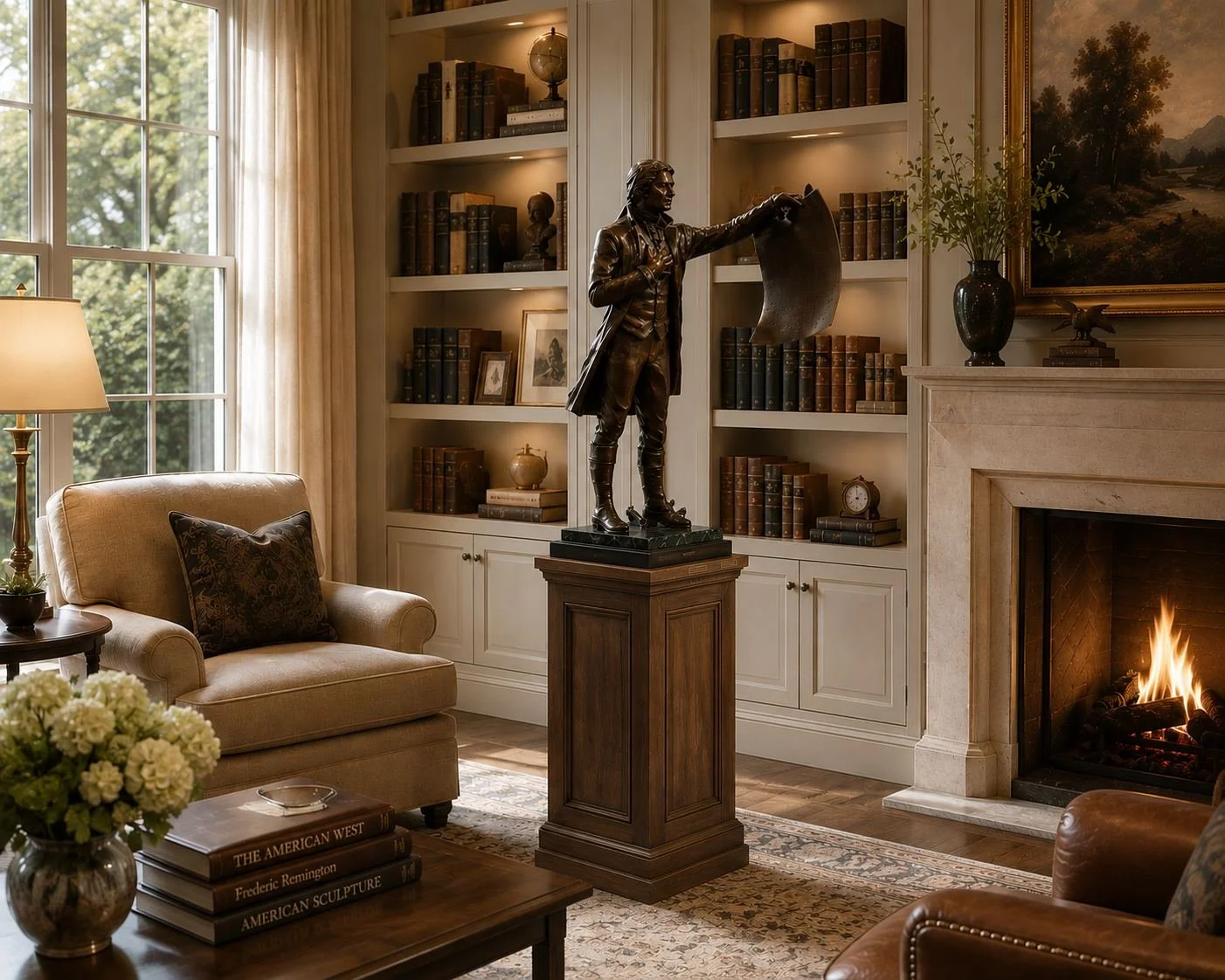
Romantic Realist sculpture offers a uniquely physical experience. Unlike paintings, a sculpture changes as you move around it, revealing new relationships of form, light, and gesture from every angle.
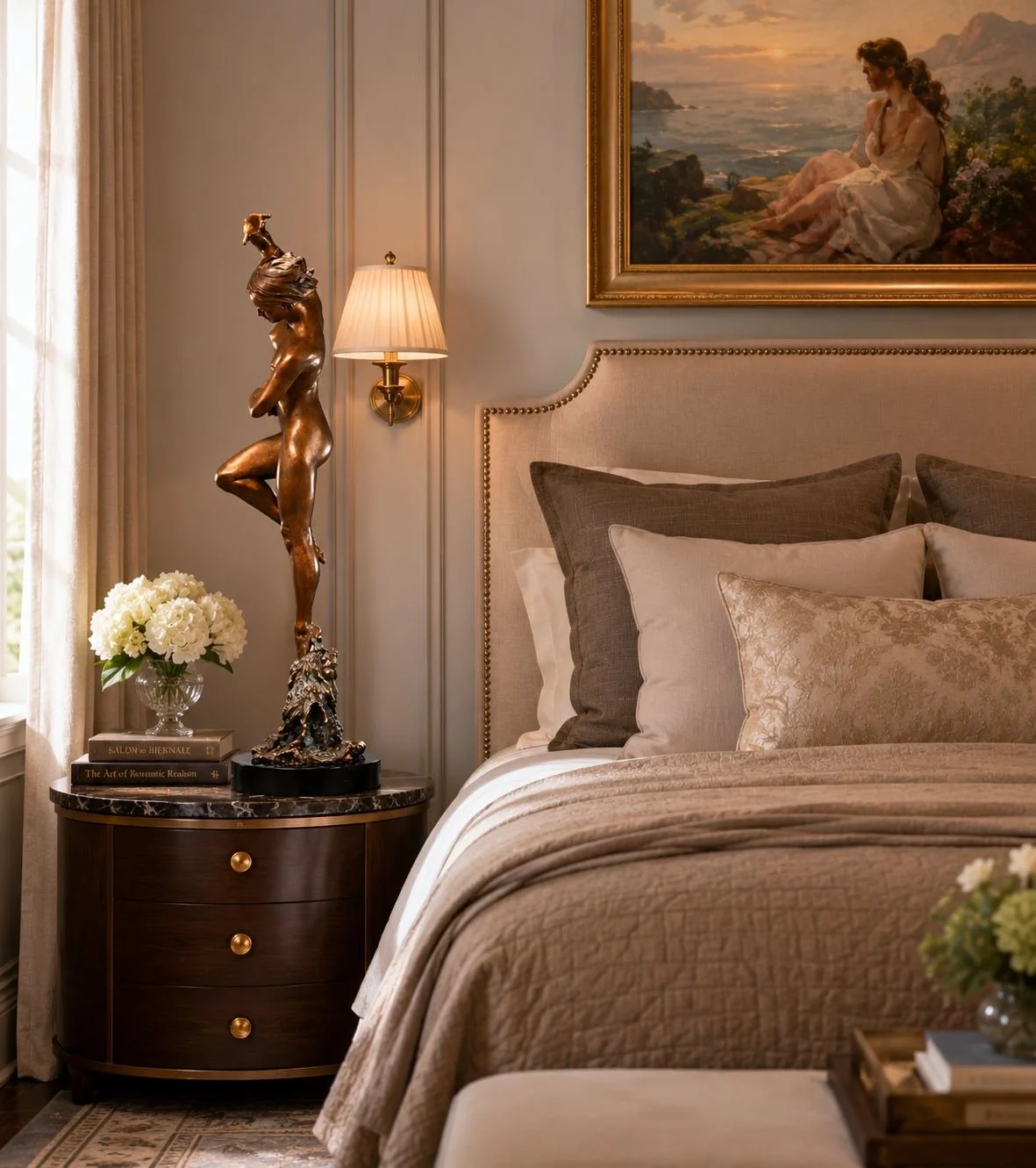
When purchasing sculpture, consider not only the work itself, but also how it will interact with its surroundings. A bronze figure in a garden will evolve with changing seasons and light, while a sculpture placed in an entryway or living room becomes a daily focal point that invites reflection and conversation.
Look for strong anatomy, expressive gesture, and technical mastery of the medium. The finest sculptures unite craftsmanship and meaning, creating an experience that is both immediate and enduring.
Judge the work, not just the image
Collectors sometimes fall in love with a subject before they evaluate the art itself. A beautiful garden, a graceful figure, or a romantic scene may attract you immediately, but the deeper question is whether the piece is well made. This is where experienced gallery guidance becomes valuable.
Study the structure beneath the charm. Is the composition ordered or cluttered? Do light and shadow create depth, mood, and emphasis? Is the sentiment earned through form and design, or is it relying on an easy subject to do all the work?
It also helps to compare several works by the same artist if possible. Consistency matters. A serious artist should show a dependable level of draftsmanship and a recognizable sensibility across different subjects. If one piece is excellent and the rest feel uneven, you may be looking at a fortunate exception rather than a reliable body of work.
Consider where the art will live
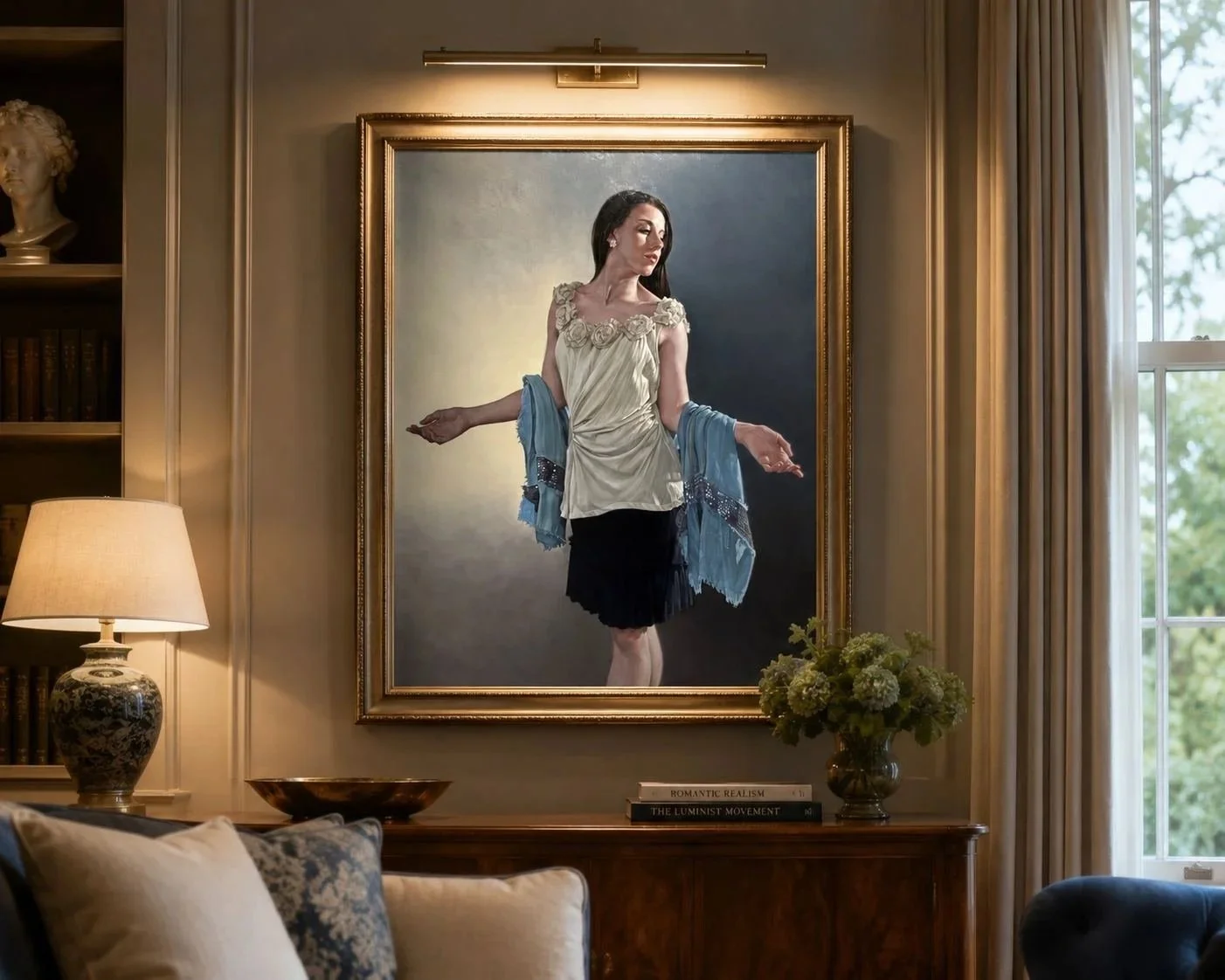
Collectors who buy thoughtfully almost always consider placement early. A work can be magnificent on its own and still be wrong for a particular setting. Scale, lighting, architecture, and surrounding furnishings all affect the experience of the piece.
For more detailed guidance on placement, lighting, framing, and caring for artwork in different environments, visit our Frequently Asked Questions about art collecting page .
A large, luminous painting can anchor a formal living room or boardroom with real authority. A more intimate drawing or still life may be better suited to a library, bedroom, or private hallway where close viewing becomes part of its pleasure. Sculptures add another layer, especially in gardens, courtyards, and entry spaces, where light changes throughout the day and the work can be approached from multiple angles.
This is not an argument for buying art to match a sofa. It is a reminder that great art deserves a setting that lets it breathe. If you are working with an interior designer or landscape designer, involve them, but do not surrender the emotional core of the decision. The finest placements honor both the artwork and the architecture without reducing either to decoration.
Work with a gallery that understands the movement
If you are serious about how to buy Romantic Realism art, the source matters. A specialized gallery offers more than inventory. It offers discernment. In a field where standards, subject matter, and philosophical intention are closely tied, curation is not a luxury. It is part of the collector's protection.
A strong gallery should be able to explain why a work matters, how an artist approaches the tradition, and what distinguishes one piece from another. It should also provide practical clarity on condition, shipping, payment options, commissions, and collector support. Trust grows when beauty and business are both handled well.
This is especially important for new collectors buying online or across long distances. High-quality images are helpful, but they do not fully replace informed guidance. A reputable gallery can speak candidly about scale, surface, framing, placement, and whether a piece is likely to meet your expectations in person. Quent Cordair Fine Art, for example, has built its reputation on combining curatorial conviction with collector-focused service, which is exactly what this category of art deserves.
Price, value, and timing
Many buyers hesitate here, and reasonably so. Original fine art is a significant purchase. But hesitation becomes more manageable when you understand what you are paying for. In Romantic Realism, price often reflects a combination of the artist's mastery, reputation, medium, size, subject complexity, rarity, and demand.
It is worth resisting two opposite mistakes. The first is buying too quickly because a work seems affordable compared to others. The second is delaying too long because you assume there will always be something similar later. A serious representational work is not interchangeable with another piece of the same subject. If the quality is there and the image continues to hold you, waiting can be costly in more ways than one.
Still, every purchase has context. If you are beginning a collection, you may want to buy one smaller but exceptional work rather than several lesser pieces. If you are furnishing a major residence or corporate setting, you may be balancing focal works with secondary placements. There is no single correct strategy. The best one aligns your budget with your standards, not with impulse or social pressure. Art consulting services like those offered by Quent Cordair Fine Art can help you narrow down your options, and help you find the art you want to see every day.
Questions worth asking before you buy
Before committing, ask how the artwork was created, what the medium requires in terms of display and care, whether framing is included or recommended, and what the timeline is for delivery if shipping is involved. If the piece is a commission, ask about the process for concept approval, progress updates, and expected completion.
If you are new to collecting, our Frequently Asked Questions page provides additional guidance on caring for paintings and sculpture, framing, display, sunlight exposure, and other common collector concerns.
You should also ask yourself a quieter question: will I still want to live with this work five years from now? Trend-based buying tends to age poorly. Romantic Realism, at its best, resists that problem because it is grounded in enduring standards of skill and meaning. But even within that tradition, your personal connection matters. Buy what enlarges your sense of life, not what merely fills a gap.
The finest purchases are rarely accidental. They come from patient looking, honest response, and a willingness to choose quality over novelty. When you buy a work of Romantic Realism with care, you are not just acquiring an object. You are giving beauty a permanent place in the structure of your days.
For more than three decades, Quent Cordair Fine Art has specialized in Romantic Realism paintings and sculpture that celebrate beauty, achievement, love, and the human spirit. Through personalized art consulting, placement visualization, and carefully curated collections, the gallery helps collectors find artwork that becomes a lasting part of their lives.