
What Is Uplifting Art?
Uplifting art is artwork that enriches the viewer’s experience through beauty, joy, wonder, meaning, aspiration, serenity, courage, human connection, or achievement. It is not defined by a single style or subject, but by its ability to offer something of value—something we want to return to and, often, live with every day.
Why do certain works of art leave us feeling lighter, more hopeful, inspired, or simply glad to be alive long after we have walked away?
The answer is deeply personal.
One person may find inspiration in a sweeping landscape illuminated by extraordinary light. Another may respond to the strength of the human figure, the tenderness of an intimate moment, the exhilaration of movement, or a vision of humanity reaching toward the stars.
What these experiences share is not necessarily a particular style or subject. It is the ability of art to remind us of beauty, possibility, joy, courage, love, serenity, achievement, or the extraordinary potential of life.
That is the essence of uplifting art.
What Makes a Work of Art Uplifting?
Uplifting art is sometimes associated with cheerful imagery, positive messages, spirituality, healing, or wellness. But its possibilities are much broader.
Art can uplift through beauty and wonder. It can celebrate love, aspiration, courage, serenity, human achievement, or the simple pleasure of seeing something extraordinary rendered with skill and imagination.
Nor does uplifting art have to ignore difficulty or portray an idealized world.
A powerful work may acknowledge struggle while directing our attention toward perseverance. A quiet landscape may inspire contemplation rather than exuberance. A heroic figure may remind us of what human beings are capable of becoming. A tender moment between two people may affirm the value of connection without saying a word.
At its best, uplifting art does not tell us what to feel.
It gives us something worth responding to—a vision, a value, a moment of beauty or meaning that enriches the experience of living with it.
Beauty and Wonder
Beauty may be one of art’s most immediate forms of uplift.
A landscape transformed by changing light. The luminous surface of water. A carefully arranged still life. The grace of the human figure. The sweep of a dancer’s movement captured in bronze.
Such works invite us to stop and look.
Beauty does not need to be complicated to be meaningful. Sometimes its power lies precisely in reminding us to notice what is extraordinary in the world around us.
For many collectors, that experience becomes even richer over time. A painting or sculpture can reveal something different as the light changes, as the viewer changes, or simply as years of familiarity deepen the relationship with the work.
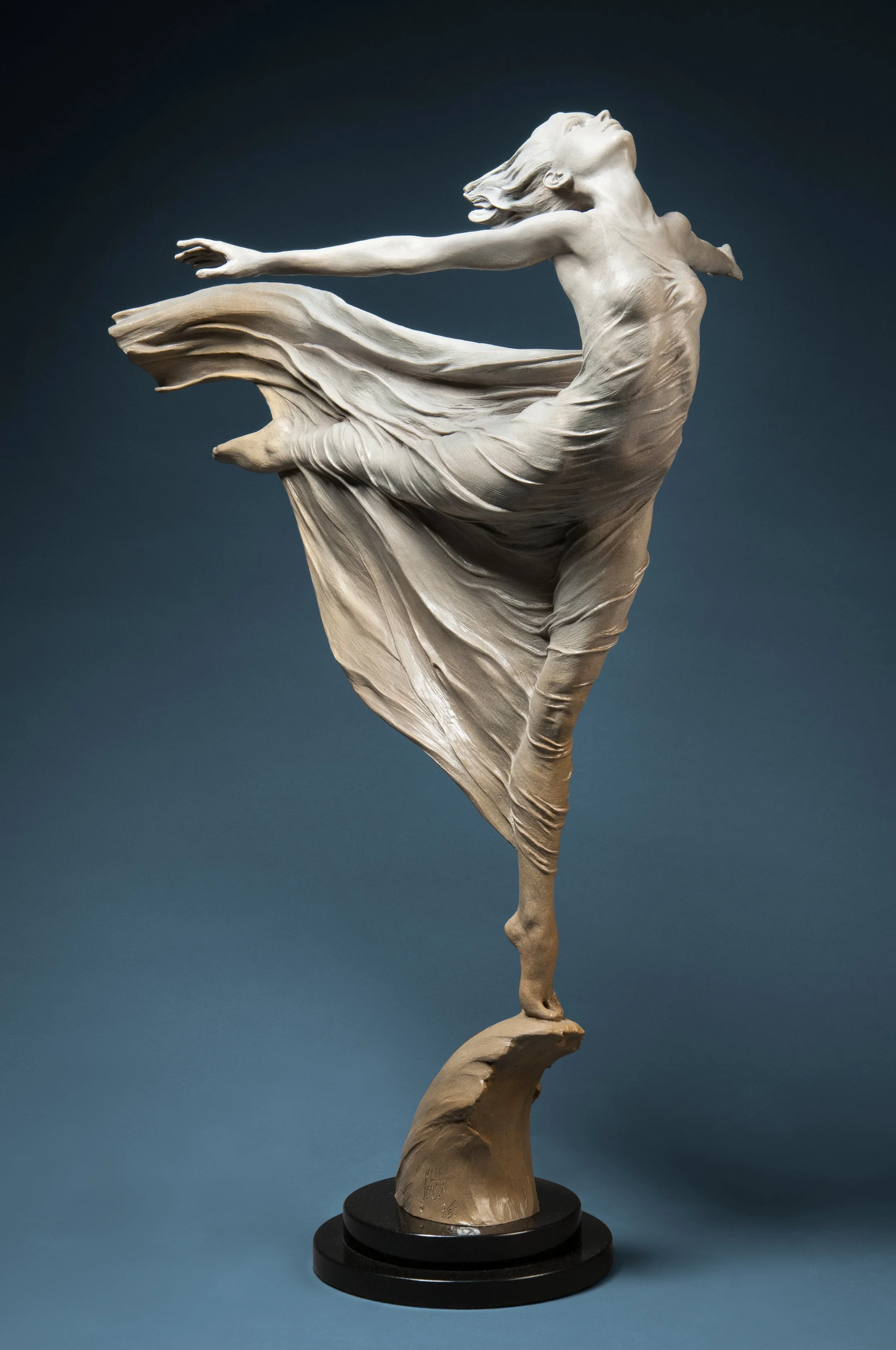
Ascending in bronze by Karl Jensen
Ascending captures a moment of exhilarating freedom as the figure rises with arms outstretched, her flowing form seeming almost weightless. The sculpture embodies grace, movement, and the joyful sensation of reaching upward—transforming bronze into an expression of possibility and the sheer pleasure of being alive.
Love and Human Connection
Some of the most uplifting works of art celebrate the relationships that give life meaning.
A gesture between two figures. A parent and child. Lovers sharing a private moment. A solitary figure whose expression invites empathy or recognition.
Figurative and narrative art can communicate experiences that are difficult to express in words.
These works need not tell a complete story. Often, they give us just enough to imagine one.
That invitation—to recognize ourselves, our relationships, or something universally human—is part of what allows narrative art to remain meaningful long after the first encounter.
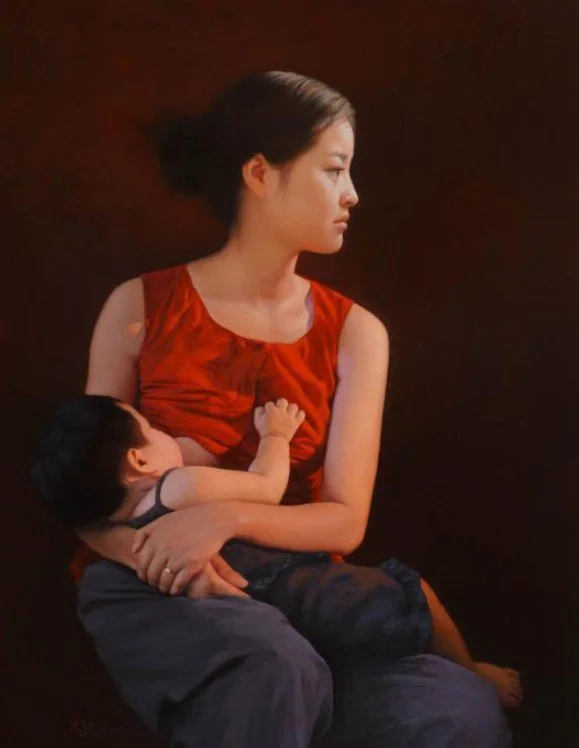
A Mother’s Love by Han Wu Shen
A Mother’s Love captures the quiet intimacy of a mother holding her sleeping child close. In this tender moment of trust and connection, the painting celebrates the profound bond between parent and child—and the love, protection, and belonging found in one another.
Courage, Aspiration, and Human Achievement
Uplifting art can also look upward.
Throughout history, artists have celebrated courage, discovery, invention, independence, perseverance, and achievement. Heroic art gives visual form to the qualities we admire and the possibilities to which we aspire.
The hero need not always stand on a pedestal.
Heroism can appear in purposeful movement, intellectual achievement, exploration, creation, or the determination to pursue a difficult goal.
Works inspired by architecture, industry, historic figures, human accomplishment, and even the exploration of space can express a fundamentally optimistic idea:
Human beings are capable of extraordinary things.
For collectors drawn to these subjects, living with such artwork can become a quiet daily reminder of values they admire.

The Power of Thought in bronze by Victor Issa
Celebrating the extraordinary capacity of the human mind—the ability to imagine, reason, create, and transform ideas into achievement. The sculpture gives physical form to an invisible force, honoring thought as the source of discovery, innovation, and human possibility.
Joy, Grace, and Movement
Sometimes art uplifts simply because it captures the joy of being alive.
A dancer suspended in motion.
A figure caught in a moment of freedom.
The graceful arc of a body.
A sculpture that seems almost to defy gravity.
Artists have long attempted to capture movement in materials that do not move, and the tension between stillness and motion can give figurative art extraordinary vitality.
These works bring energy into a space. They remind us of play, freedom, confidence, sensuality, grace, and the physical pleasure of movement itself.
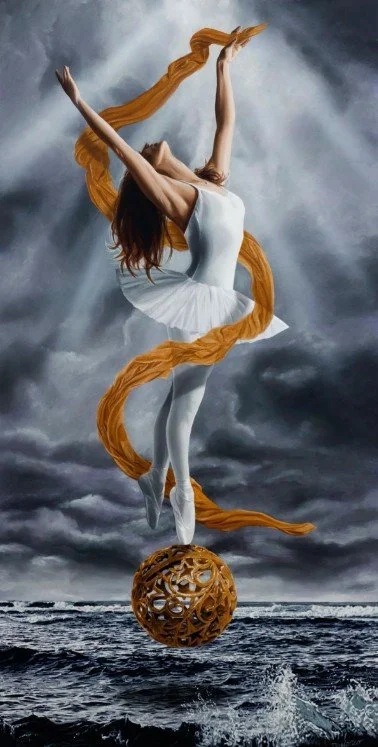
Imagination by Chris Dellorco
A dancer rises above the restless sea, entwined with a golden ribbon that seems to carry thought into motion, embodying creativity, possibility, and the freedom to reach beyond the world as it is toward what it might become.
Serenity and Contemplation
Not all uplifting art is exuberant.
Some of it whispers.
A peaceful landscape, a quiet interior, a contemplative figure, or the still surface of water can create a very different emotional experience—one of calm, reflection, and restoration.
The artwork does not demand attention.
It waits for it.
These quieter works can become particularly meaningful in a home because they provide something increasingly rare: a place for the eye and mind to rest.
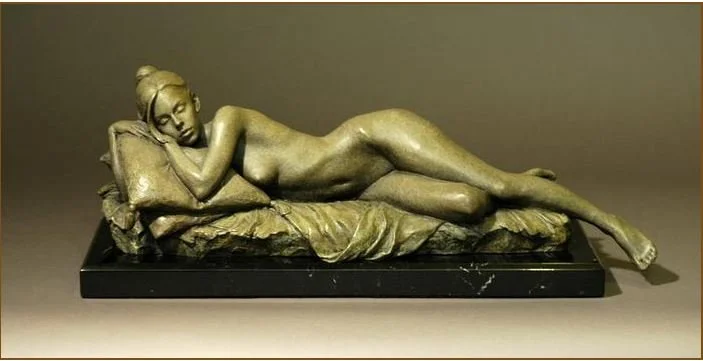
Sleeping Nude by Karl Jensen
A serene celebration of rest, peace, and the quiet harmony of body and spirit. Reclining gracefully in a moment of complete repose, the figure embodies tranquility, self-acceptance, and the restorative power of stillness.
Possibility, Imagination, and the Future
Art has never been limited to depicting the world exactly as it exists.
It can also show us what might be.
Artists who explore space, technology, architecture, invention, and imagined futures extend the tradition of representational art into the realm of possibility.
Space-inspired art, in particular, can unite beauty with one of humanity’s oldest impulses: the desire to explore beyond the known.
These works celebrate curiosity and discovery while asking us to imagine what human beings may yet accomplish.
In that sense, uplifting art can look not only at the beauty of the present, but toward the promise of the future.
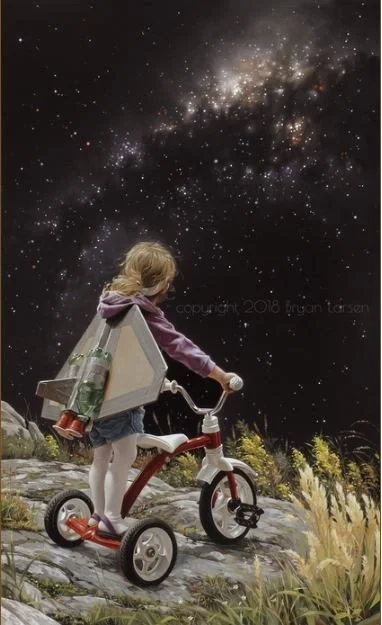
Off the Beaten Path by Bryan Larsen
Capturing the boundless imagination of childhood, where an ordinary adventure can become the beginning of an extraordinary journey. Beneath a vast universe of possibility, a young explorer reminds us that curiosity, wonder, and the courage to venture beyond the familiar are where discovery begins.
What Kinds of Art Can Be Uplifting?
There is no single subject, medium, or artistic style that defines uplifting art.
It may be found in:
• A landscape filled with extraordinary light
• A still life celebrating the beauty of everyday objects
• A nude or adorned figure expressing grace, strength, beauty, or sensuality
• A narrative painting suggesting a meaningful human story
• A portrait revealing character and individuality
• A sculpture capturing movement, freedom, or connection
• A heroic work celebrating courage and achievement
• An architectural or technological subject honoring human ingenuity
• A space-inspired work expressing wonder, exploration, and possibility
What matters is not whether an artwork fits neatly into a category.
What matters is the experience it creates.
Why Do People Choose to Live With Uplifting Art?
For collectors, the significance of uplifting art often becomes clearest after the artwork comes home.
A painting or sculpture becomes part of the rhythm of everyday life—something encountered over morning coffee, passed in a hallway, glimpsed from another room, or noticed anew as the afternoon light changes.
Over decades of helping collectors choose art, we have seen that the works people treasure most are often those that continue to give something back.
They may evoke joy, tranquility, aspiration, memory, wonder, or simply the pleasure of beauty.
The reason is deeply personal, but the result is remarkably consistent:
The right artwork becomes difficult to imagine living without.
That is one of the profound differences between seeing art and living with it.
Choosing Art That Reflects What You Value
Choosing artwork is intensely personal.
Some collectors are drawn immediately to a subject. Others respond first to color, composition, technique, or emotion. Sometimes the attraction is instantaneous and difficult to explain.
That is perfectly fine.
You do not need to know the name of an artistic movement to recognize that something speaks to you.
You may not be searching for Romantic Realism, narrative representational art, or even uplifting art.
You may simply know:
I love this.
The deeper questions often come afterward.
Why does this work continue to hold my attention?
What does it make me feel?
What does it remind me of?
What does it say about the things I value?
And perhaps the most practical question of all:
Do I want to live with it every day?
Those questions are often more useful than any label.
Where Can I Find Uplifting Art?
Uplifting art can be found across many genres of contemporary representational art, from landscapes and still lifes to figurative, narrative, heroic, and space-inspired works.
Since 1996, Quent Cordair Fine Art has helped collectors discover and acquire contemporary representational art that celebrates beauty, meaning, human connection, aspiration, and achievement.
The gallery’s collection includes Romantic Realism and a broad range of original paintings and sculpture by contemporary artists.
Collectors can explore and acquire original paintings and sculpture ranging from luminous landscapes and still lifes to nude and adorned figurative works, narrative paintings, heroic subjects, and visionary space-inspired art—with personalized guidance in finding artwork they will love living with every day.
For those who are unsure where to begin, personalized art consulting can help identify works based on individual tastes, interests, spaces, and budgets. Complimentary Art Visualization can also help collectors see how a painting or sculpture may look in their own home before making a decision.
Because ultimately, uplifting art is not defined by a label.
It is defined by what happens between the artwork and the person who encounters it.
The finest works do more than fill an empty wall or occupy a pedestal. They become part of the atmosphere of our homes and the texture of our everyday lives.
They remind us of what we find beautiful.
What we admire.
What we love.
And sometimes, what we believe life can be.
Related Resources
Explore Original Paintings — Original Paintings
Explore Fine Art Sculpture — Fine Art Sculpture
Discover Romantic Realism — Romantic Realism
Personalized Art Consulting — Art Consulting Services
See Art in Your Own Space — Art Visualization
Frequently Asked Art Questions — Fine Art FAQ